Layering a Garden That Works

Declan Kennedy
| 17-11-2026
 · Nature Team
Hello, let's get started. Most people plant a garden one purchase at a time, grabbing whatever looks good at the nursery and squeezing it into whatever space is left.
The result is usually a flat row of similar-sized plants that never quite fills out. Layering works the other way around: you decide the vertical structure first, then pick plants that fit each level.
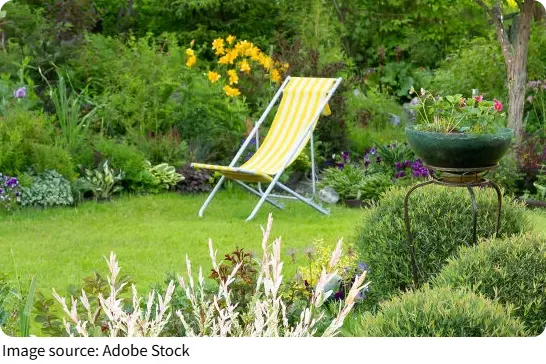
Start with the tallest tier
Trees set the frame, so choose them before anything else goes in the ground. A single 6 to 8 meter tree such as a Japanese maple or a flowering crabapple anchors a bed and gives the lower plants something to sit against. Give it room, though. Leave enough room between the tree and any wall or fence for the canopy to reach its mature width without constant pruning. If your space is tight, a columnar form like a fastigiate hornbeam keeps the height without eating the width.
Shrubs fill the middle gap
This is the layer people skip, and it's the one that makes the whole thing read as a garden instead of a collection of pots. Shrubs bridge the trunk zone and the ground, hiding bare stems and giving the bed real mass. Aim for plants in the 60 cm to 1.5 meter range: hydrangeas, viburnum, dwarf conifers, boxwood. Vary the shapes or you'll get a hedge effect by accident. One rounded mound next to one upright grower, like a ball-shaped boxwood beside a spiky Russian sage, does more for the composition than five identical shrubs in a row.
Flowers do the close-up work
Perennials and annuals sit at the front edge, roughly 20 to 50 cm tall, where you actually see them. This is where you can be loose and change things year to year. Group them in odd numbers, three or five of one kind, rather than dotting singles around. A drift of five purple coneflowers reads as a deliberate patch; one lonely coneflower reads as an accident. Repeat the same flower in two or three spots across the bed and the whole planting ties together.
Overlap the edges, not the labels
The trick that separates a layered bed from three stacked rows is letting the tiers bleed into each other. Let a shrub's lower branches flop over the perennials. Let tall flowers like foxgloves or verbena push up past the shrub line. When each layer stops at a clean invisible boundary, you get stripes. When they interlock, you get depth. A good rule of thumb: the front of one tier should sit a little behind the middle of the one in front of it.
Match plants to the same conditions
A layered bed only holds together if every tier wants the same soil and light. Putting a shade-loving fern under a sun-hungry lavender is a plan for one of them to fail. Check the light at the actual spot, not the average for your yard. A bed that gets 4 hours of direct sun counts as part shade, and that narrows your tree, shrub, and flower choices all at once. Get that match right and the layers mostly maintain themselves.

Layering isn't complicated, but it does ask you to plan the skeleton before you shop. Pick your tree, fill the middle with shrubs of mixed shapes, group your flowers in odd-numbered drifts, and let the tiers overlap instead of stacking neatly. Next time you stand in front of a nursery display, look up first, then down, then at eye level, and you'll see the bed before you buy a single plant.